

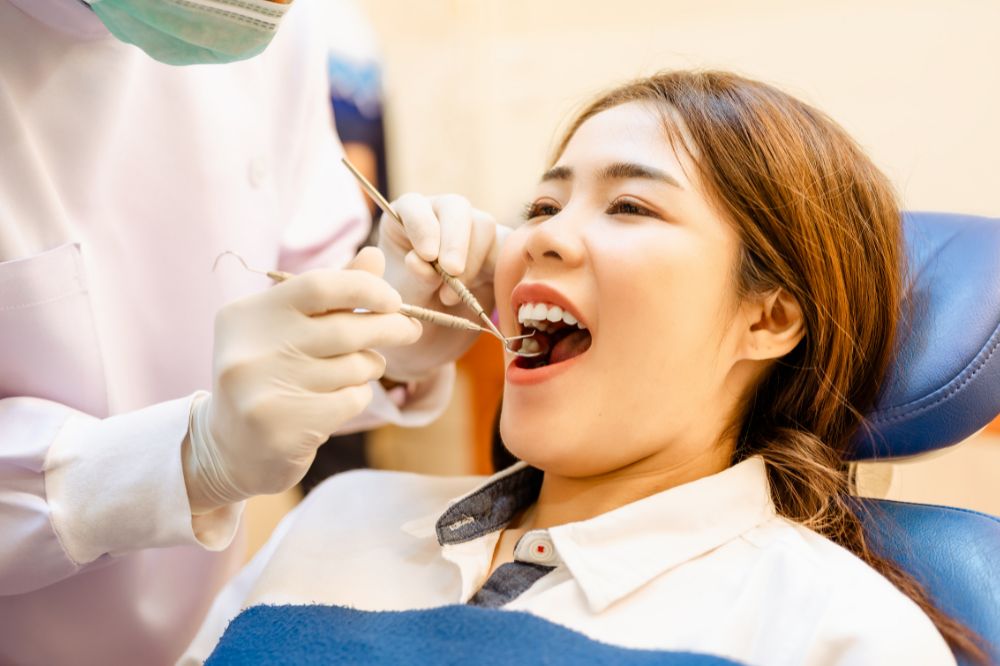
Jaw pain can be frustrating and uncomfortable. You might notice clicking or popping sounds when you chew, difficulty opening your mouth fully, or constant pain in your jaw joint. These are signs of TMD, a condition affecting millions of people. If you have been experiencing jaw problems and searching for solutions, finding a dental clinic near you that treats TMD can provide relief. TMD treatment offers several effective options that do not require surgery. Understanding TMD treatment in Little Italy and what your dentist can do helps you explore solutions and find relief from jaw pain.
What Is TMD and What Causes Jaw Pain?
- TMD stands for Temporomandibular Disorder. It affects your jaw joint — the hinge that connects your lower jaw to your skull.
- TMD involves several potential triggers. Stress causes you to clench or grind your teeth, putting pressure on the jaw joint. Misaligned teeth create uneven chewing forces that stress the joint.
- Poor posture, particularly forward head posture from looking at phones or computers, strains your jaw joint. Trauma from an accident or injury can damage the joint. Arthritis affects the joint just like it affects other joints in your body.
- Certain habits like chewing gum excessively or biting your nails stress the jaw joint.
TMD treatment near you can help you overcome issues related to it.
Signs You Have TMD
Several symptoms indicate TMD might be affecting you.
- Jaw pain or tenderness is the most obvious sign. Pain may be mild or severe and may affect one or both sides.
- Clicking or popping sounds when you open your mouth or chew indicate joint problems.
- Difficulty opening your mouth fully — your jaw feels stuck or limited in movement.
- Headaches that do not respond to pain relief often result from jaw tension.
- Ear pain or ringing in your ears can be related to TMD.
- Neck and shoulder tension often accompanies jaw problems.
Can a Dentist Treat TMD Without Surgery?
Yes, most TMD cases respond well to non-surgical treatment.
- A night guard or mouth guard worn while sleeping prevents grinding and clenching, reducing stress on the jaw joint. Custom-made guards are far more effective than store-bought options.
- Your dentist corrects bite problems by adjusting your bite alignment or recommending orthodontic treatment if needed.
- Physical therapy exercises strengthen your jaw muscles and restore proper function.
- Stress management techniques, including relaxation exercises, reduce jaw clenching from stress.
- Heat and ice therapy manage pain and swelling.
- Anti-inflammatory medications reduce inflammation in the joint.
Professional TMD Evaluation
- Your dentist thoroughly evaluates your jaw to diagnose TMD.
- They ask about your symptoms and when they started. They examine your jaw joint by listening and feeling for abnormalities.
- Your dentist checks your bite alignment and how your teeth come together.
- X-rays or other imaging may be taken to see the joint structure clearly.
Based on this evaluation, your dentist recommends appropriate treatment.
Treatment Options Available
There are a few methods to manage TMD symptoms.
- A custom night guard prevents grinding and clenching damage while you sleep.
- Bite correction through orthodontics or crown work aligns your teeth properly.
- Jaw exercises and physical therapy restore normal function and reduce pain.
- Stress reduction techniques, including meditation or yoga, reduce jaw tension.
- Regular professional monitoring ensures treatment is working and adjustments are made as needed.
When to Seek Professional Help
Do not ignore jaw problems hoping they resolve on their own.
- Persistent jaw pain that lasts more than a few days warrants professional evaluation.
- Difficulty eating or speaking due to jaw problems needs prompt attention.
- Clicking or popping sounds that worsen over time indicate progression requiring treatment.
- Early intervention prevents problems from becoming chronic and difficult to treat.
Get Relief From Jaw Pain Today — Rusholme Family Dentistry Is Here for You
TMD is treatable. With the right professional care and commitment to home management, you can reduce pain, restore function, and enjoy eating and speaking comfortably again. At Rusholme Family Dentistry, the team specializes in TMD treatment and helping patients find relief from jaw pain. Book you appointment with us today and take the first step toward a pain-free jaw.
FAQs:-
Q1: How long does it take to treat TMD?
Treatment duration varies depending on severity and individual response—mild cases may improve in weeks while more serious conditions may require months of consistent treatment.
Q2: Will my TMD relapse after treatment?
Appropriate treatment of TMD results in frequent lasting improvement, and continuing with good habits such as stress management and stopping stress-inducing habits will help prevent a recurrence.
Q3: Can TMD cause permanent damage?
Early intervention prevents permanent damage—untreated TMD can lead to chronic problems, but with proper treatment most people recover fully.
Q4: Is TMD only caused by grinding teeth?
Grinding is one cause, but TMD has multiple causes, including stress, poor posture, bite problems, and trauma—your dentist identifies the specific cause in your situation.
Q5: Can children get TMD?
Yes—children can develop TMD, though it is less common than in adults—early treatment in children often prevents problems from becoming chronic.